The propaganda game: 2021 Iraq parliamentary election
Iraqi people are one of a kind. They have been through dictatorships, invasions, sectarianism and insurgence, and they still rise from the ashes and welcome you with a smile, making jokes about how screwed up they are. Everyone in Iraq has at least one story to tell that would be worth an Oscar.
Iraq nowadays is still recovering from what could have had been its end as a sovereign country: the Islamic State. In 2014, more than one third of the country was swiftly occupied by the extremists, who surprised everyone and faced no resistance in a country that has been divided for decades. Many religious branches form the Iraqi puzzle: Shia muslims, Sunni Muslims, Catholic Christians, Sunni Kurds, Greek Catholics, Yazidis and so on. Since the destruction of Saddam’s power, each one of these groups has tried to catapult itself to the power, ending in armed violence in most of the cases. In Iraq, they don’t vote for left-wing or right-wing parties, they vote for Sunni, Shia, Kurdish or Christian parties. Voting is a way to represent yourself as a confession, thus trying to avoid a bigger influence of the other one.
Iraq is, theoretically, a democracy. Nevertheless, freedom of speech is not granted at all. Many of the protesters that took part in the Tishreen demonstrations (2019) have been banned to participate in the elections in their own political parties, as many militias threatened them with assassinations or kidnappings, in order to prevent another status quo. It’s really difficult to find political parties without militias. Political parties have their headquarters fully secured with armed guards, in order to avoid attacks from the other armed groups. Even militias from the same religious confession battle with each other. Elections in Iraq look like the ones on a real democracy, with their polling stations, ballots and political campaigns, but there is such a dirty game going on behind the scenes.
That’s the propaganda game. The story of how armed organizations that look like political forces in a democratic system try to get people’s confidence. Welcome to Iraq, a country destroyed by the West, still recovering from all the wounds our governments did to them.
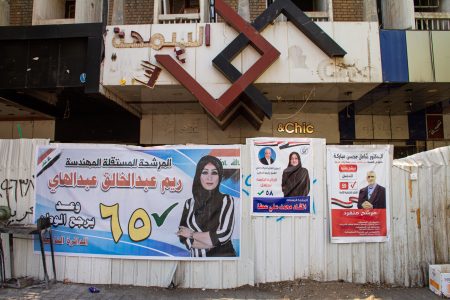
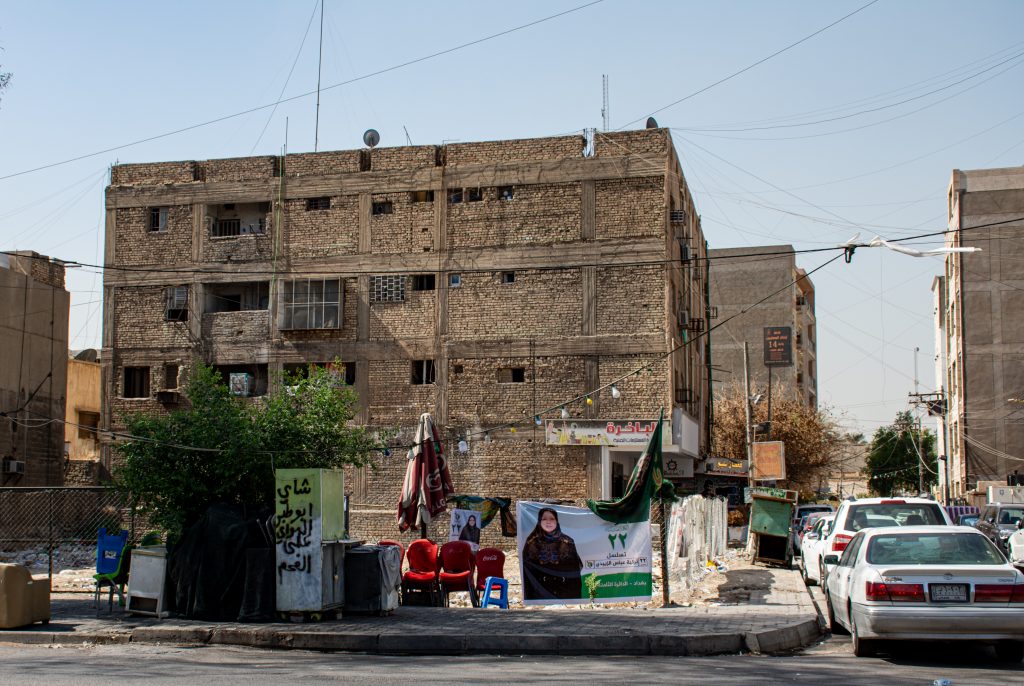
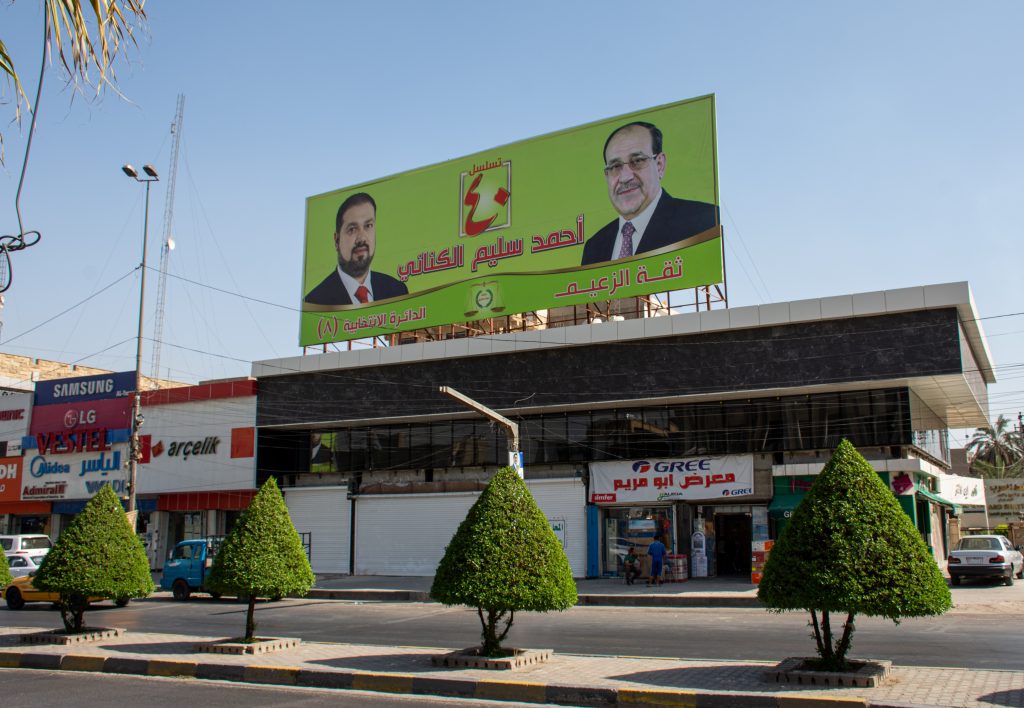
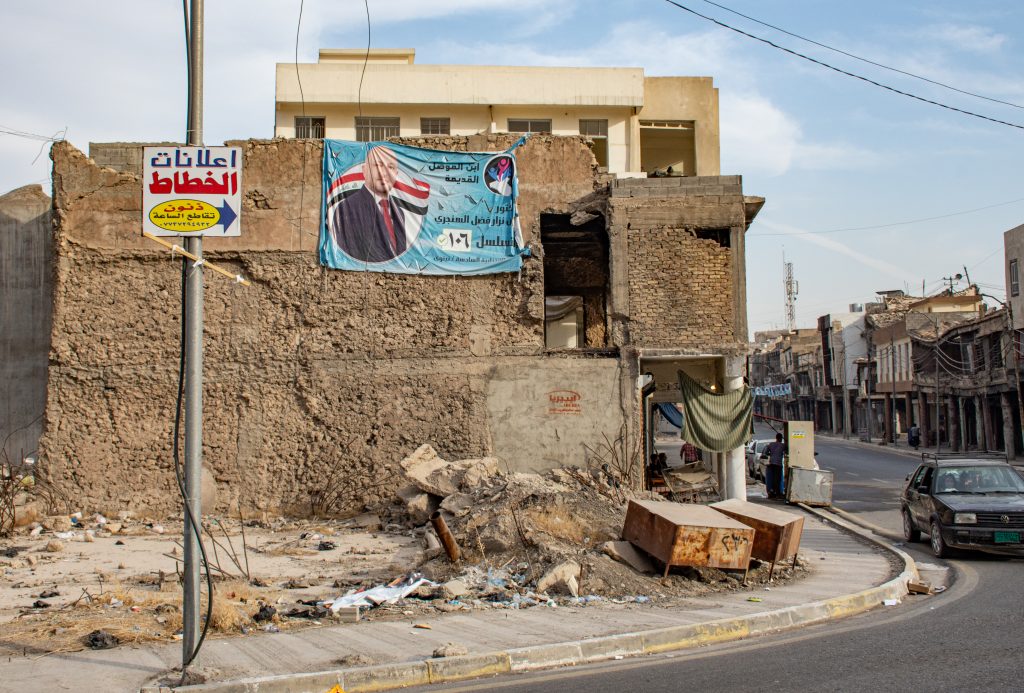
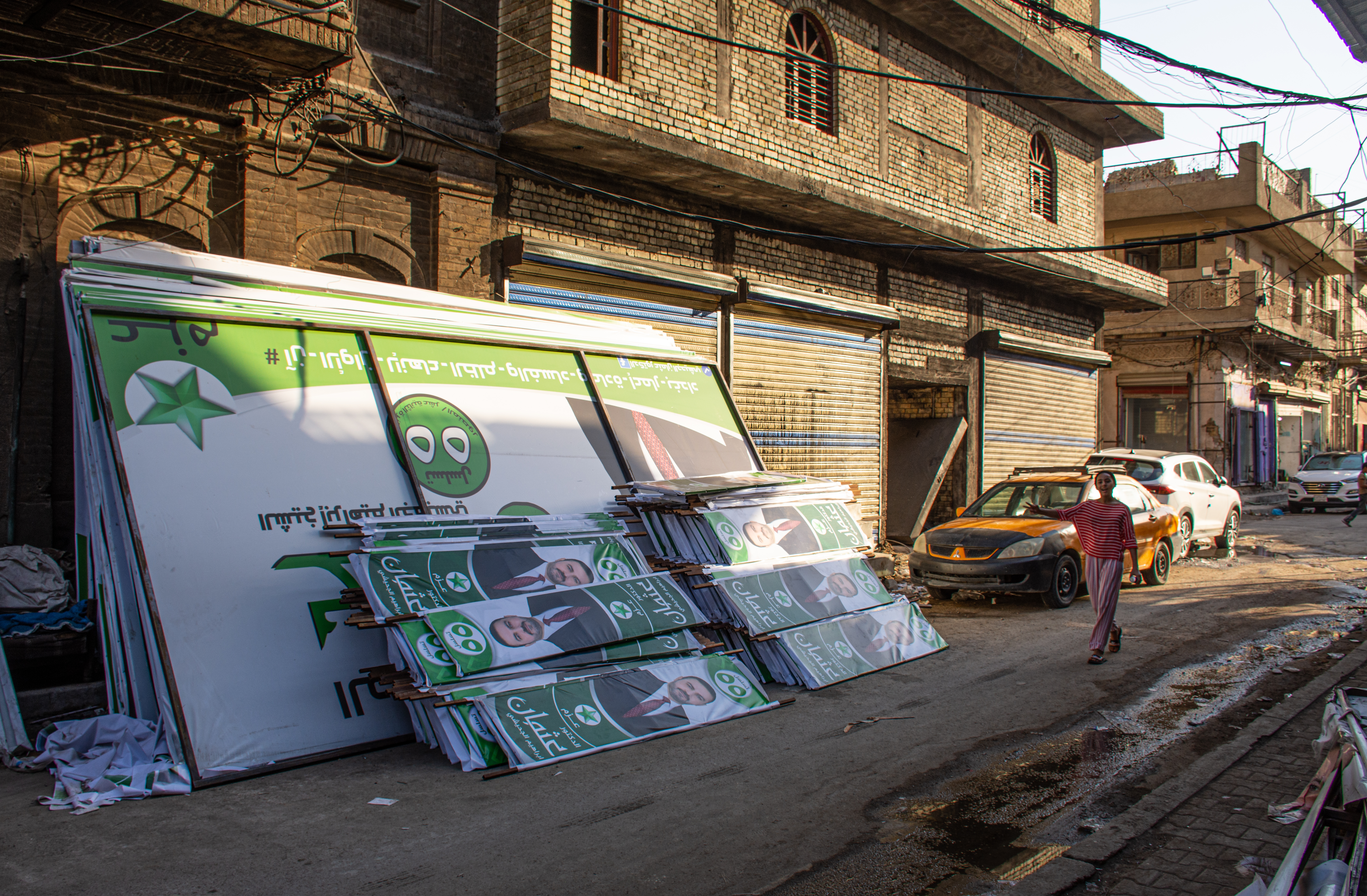
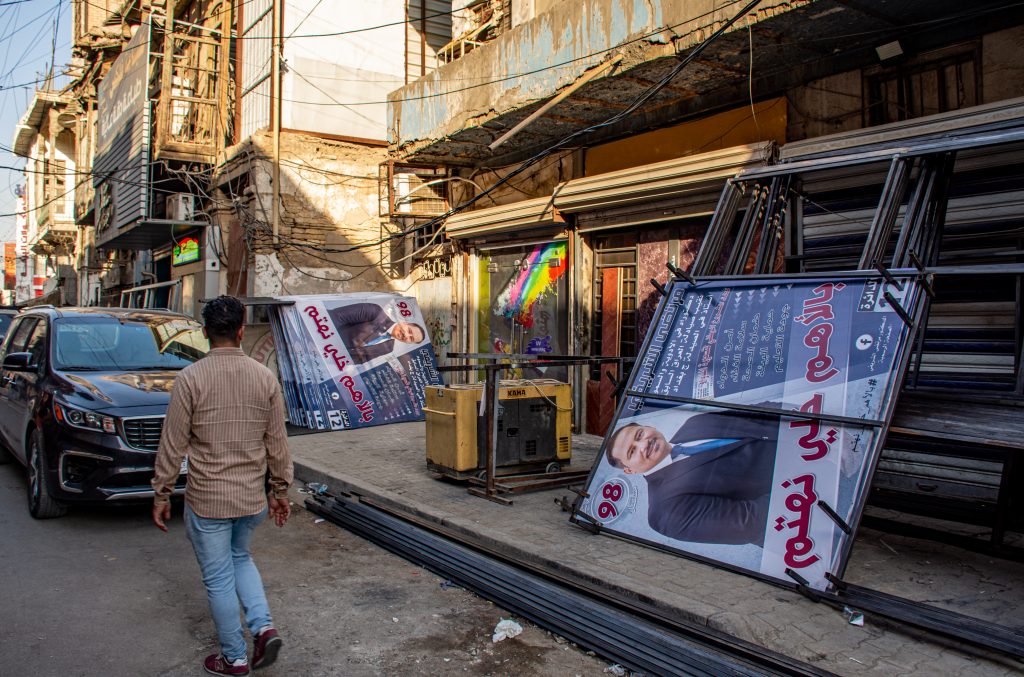
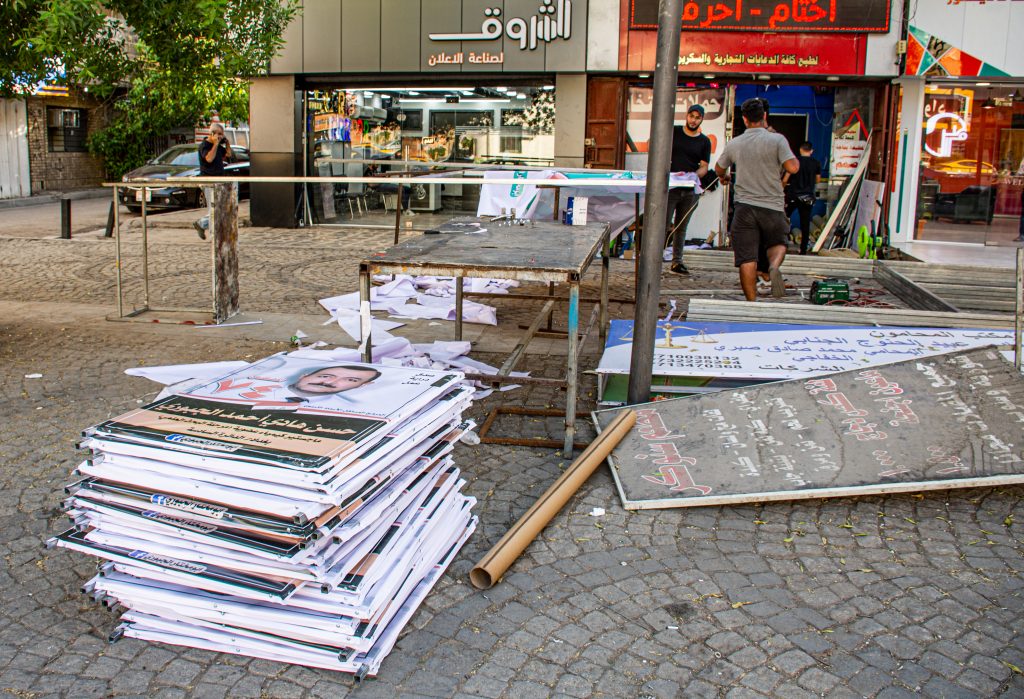
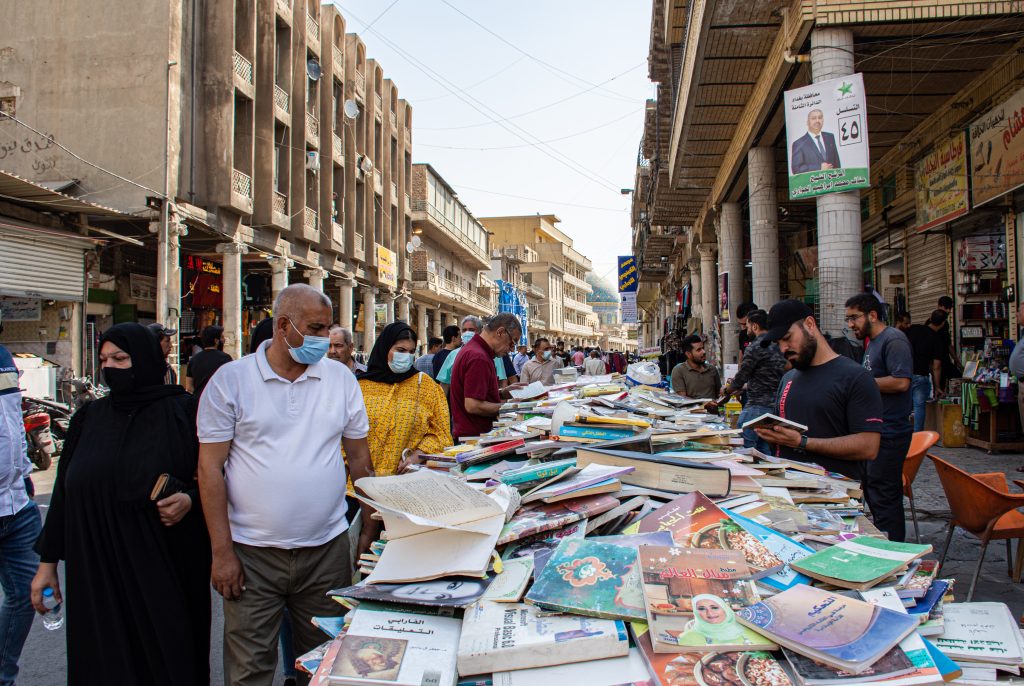
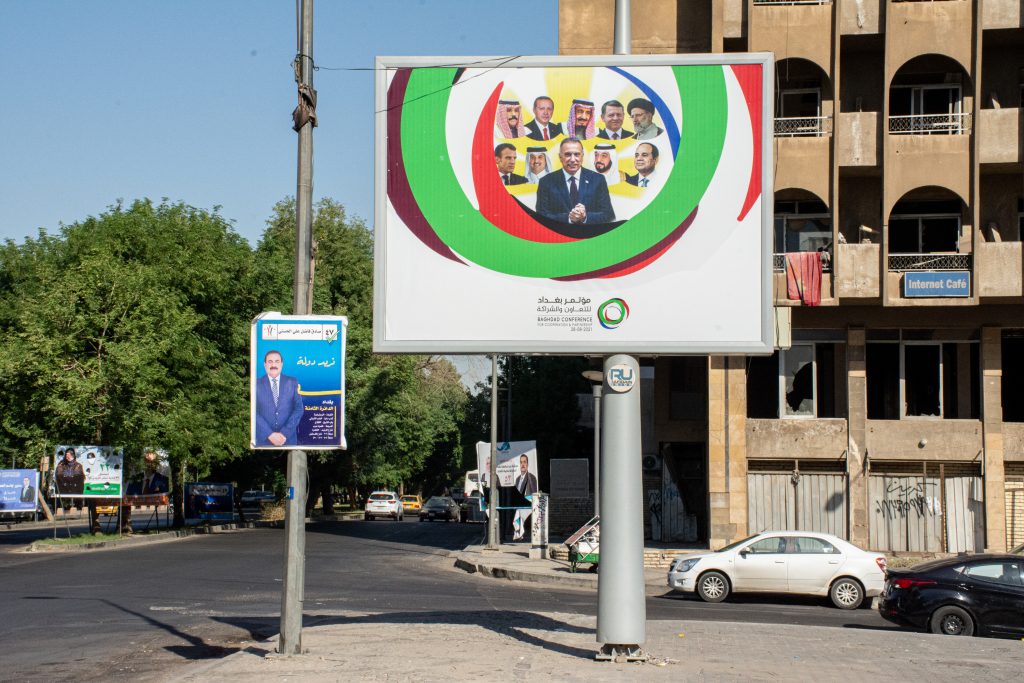
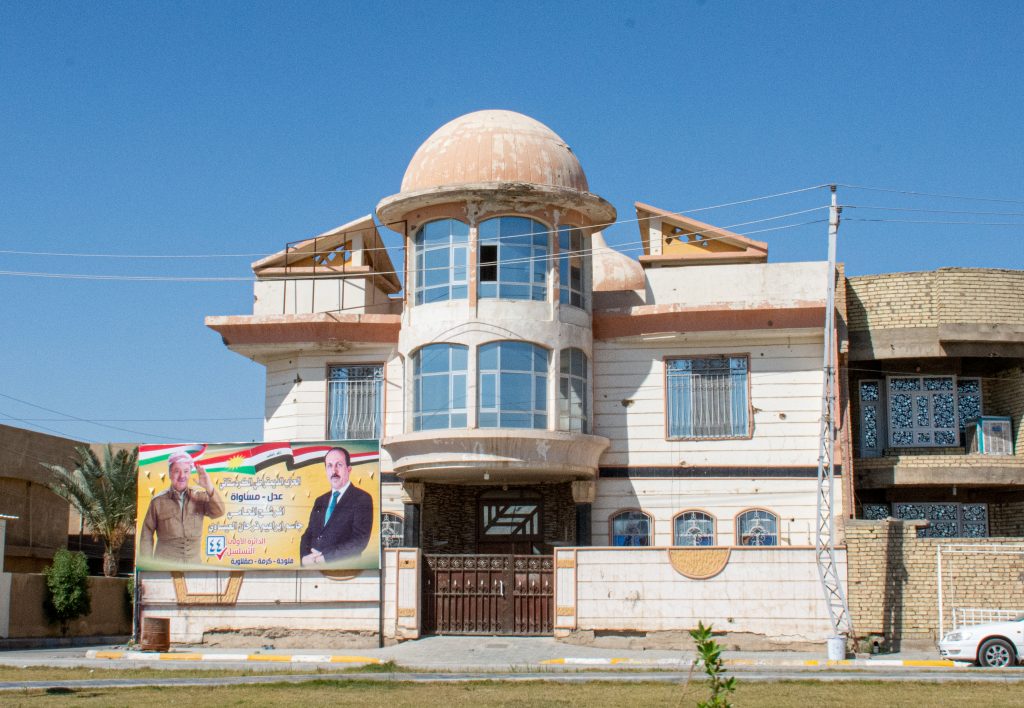
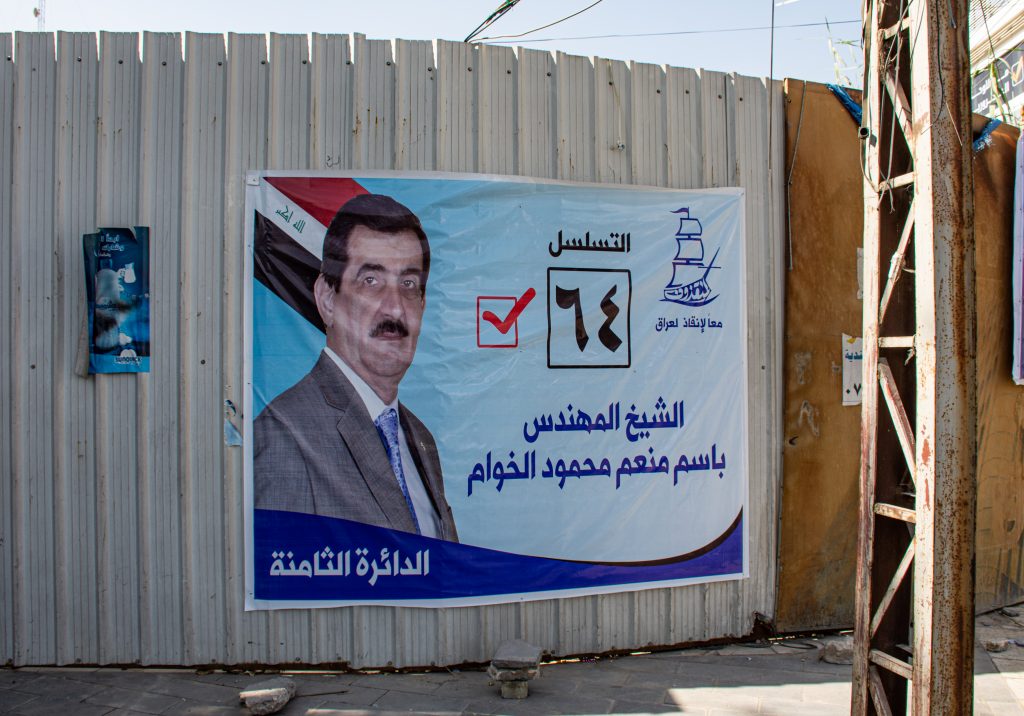
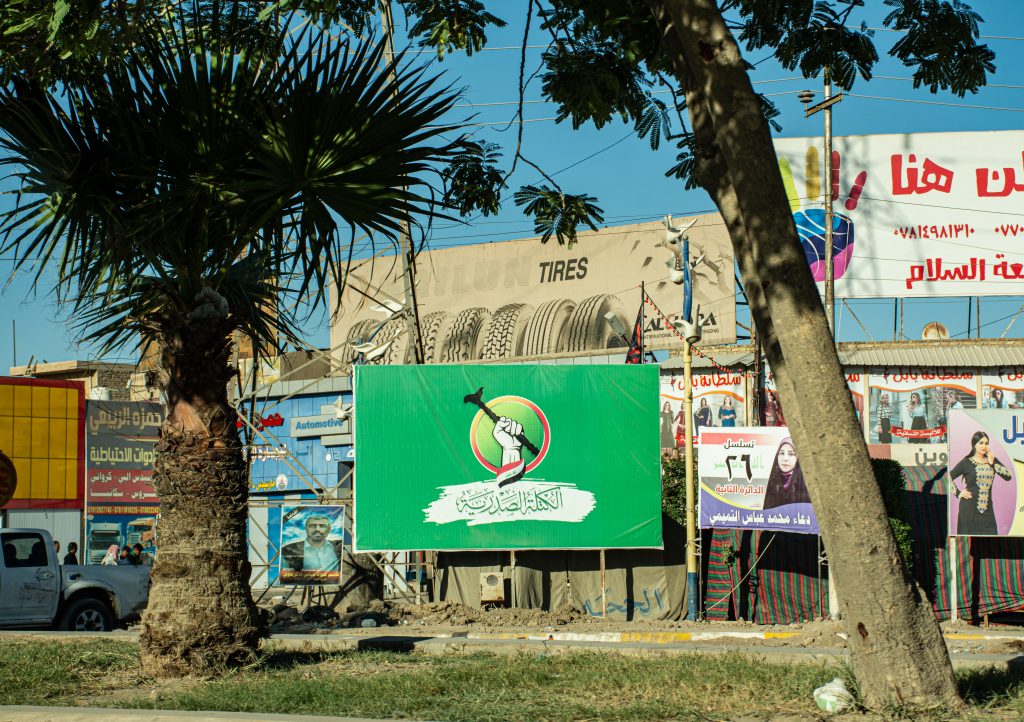
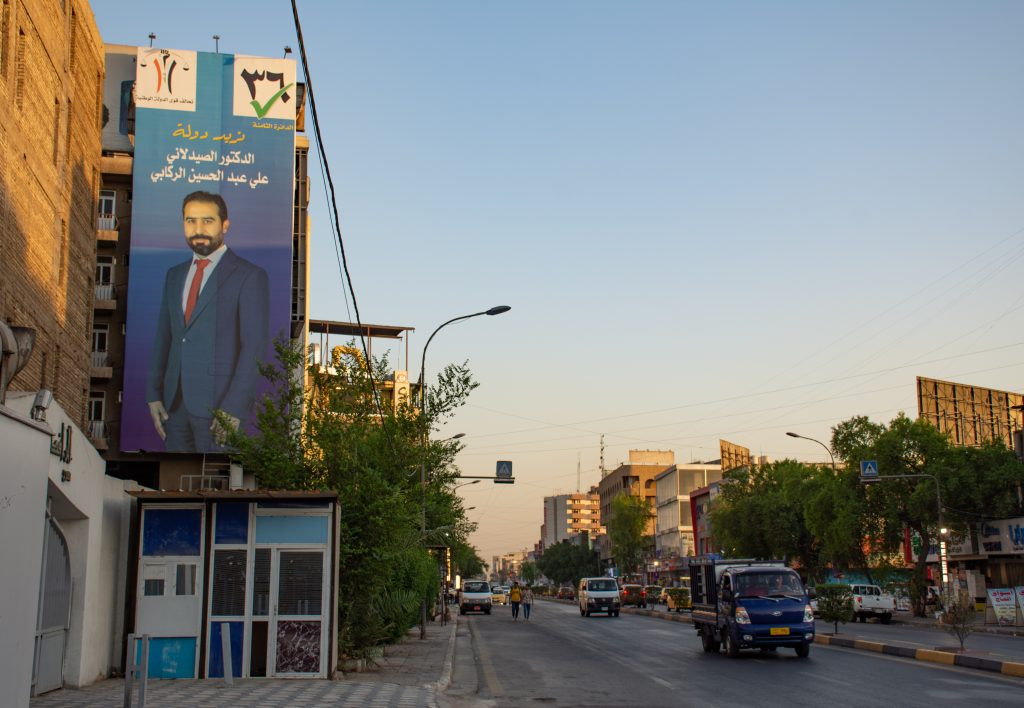
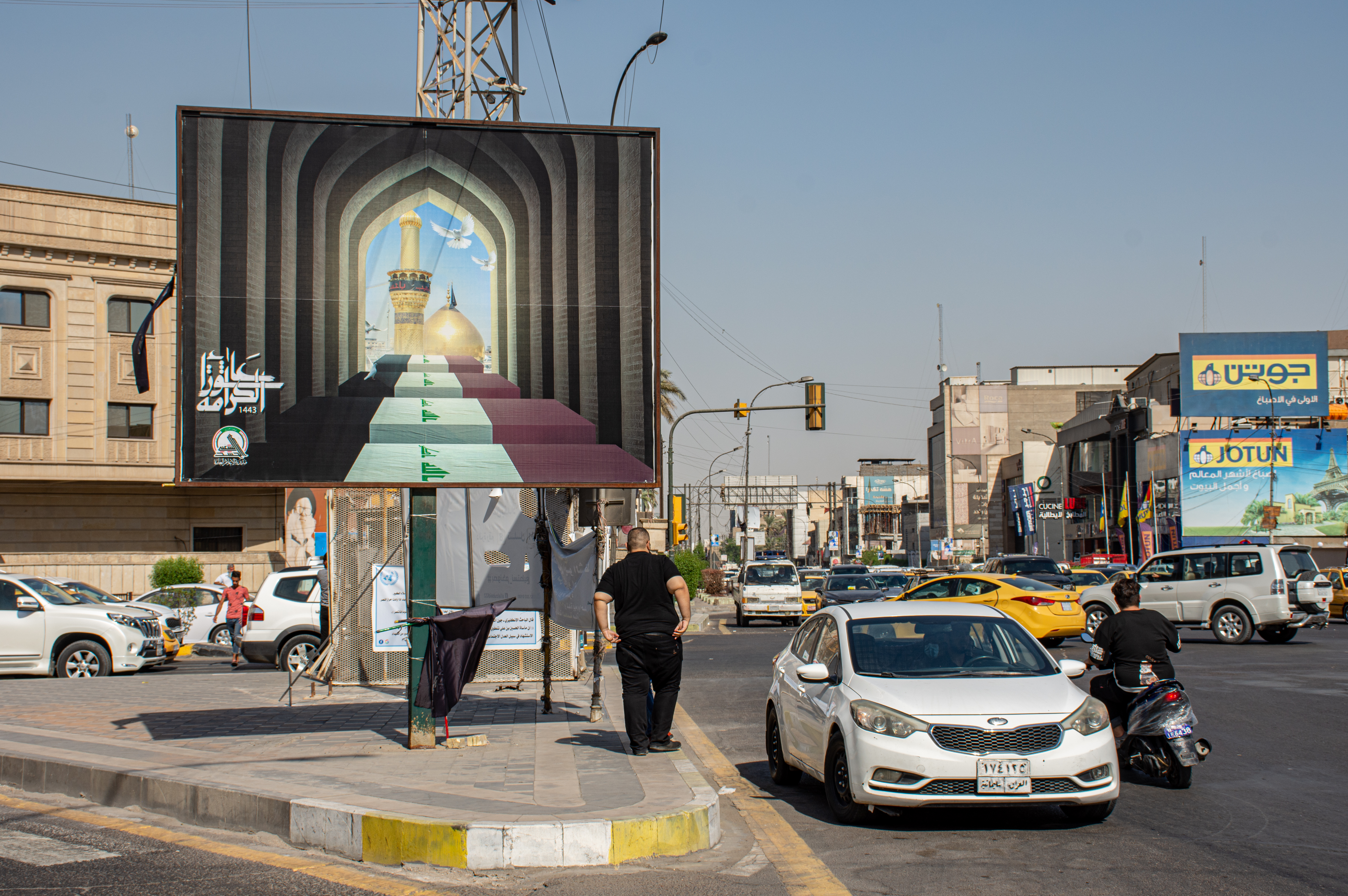
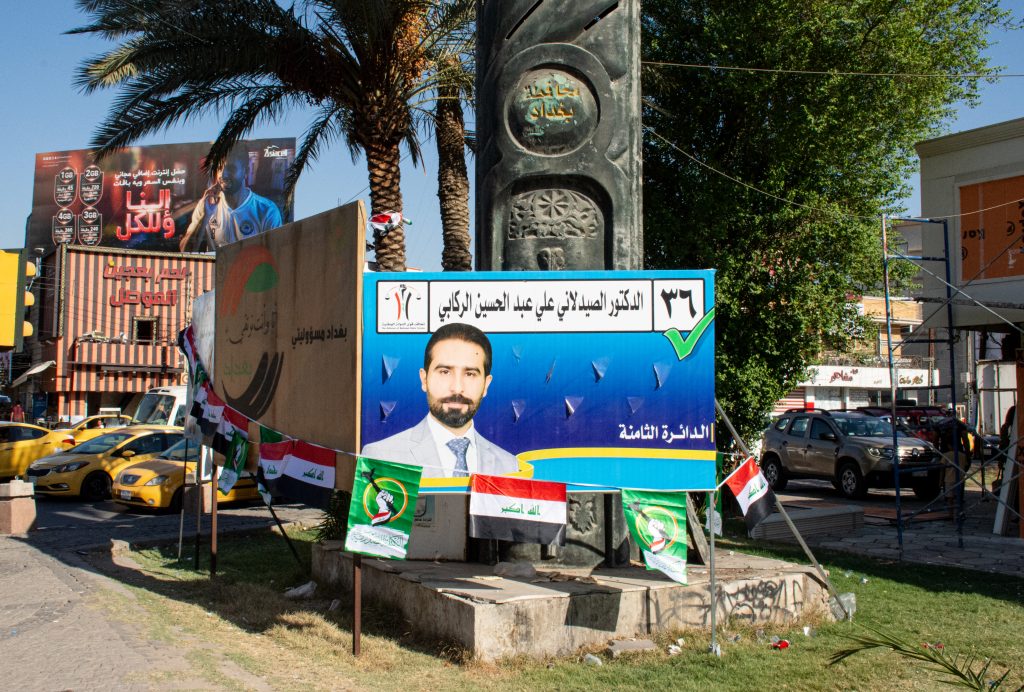
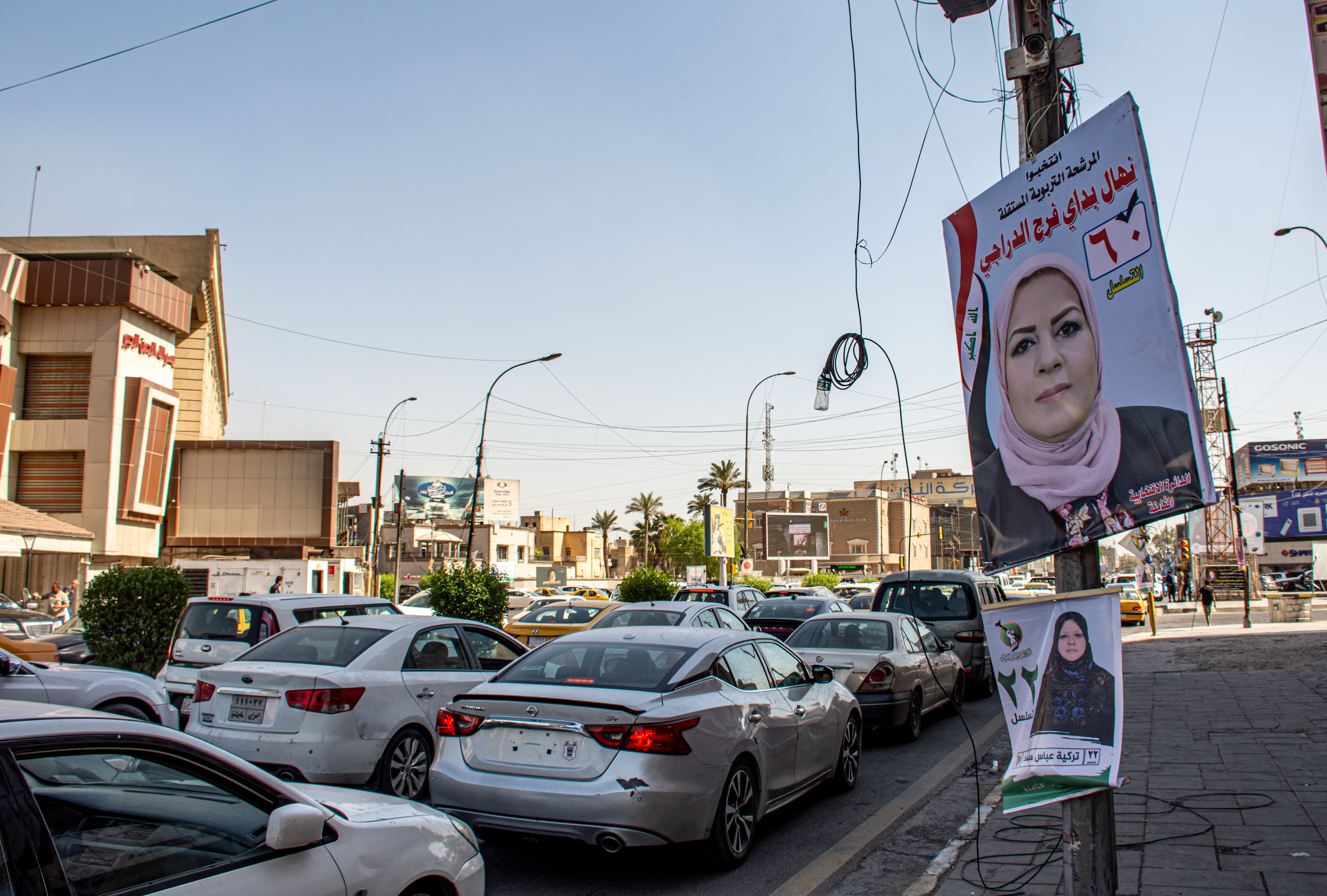
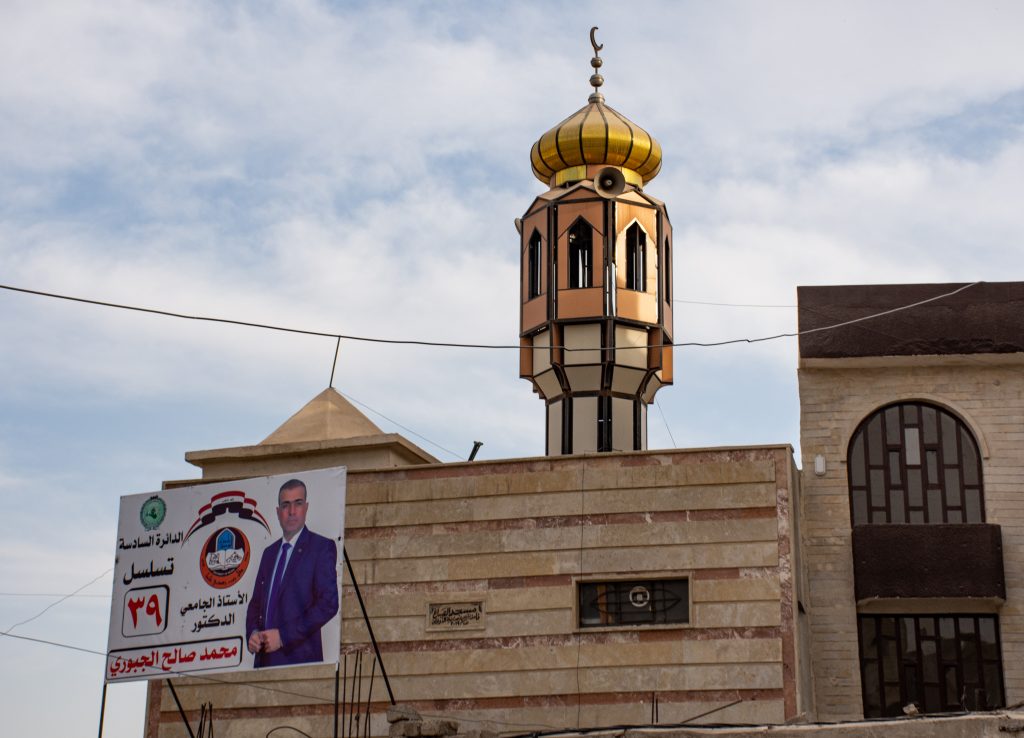
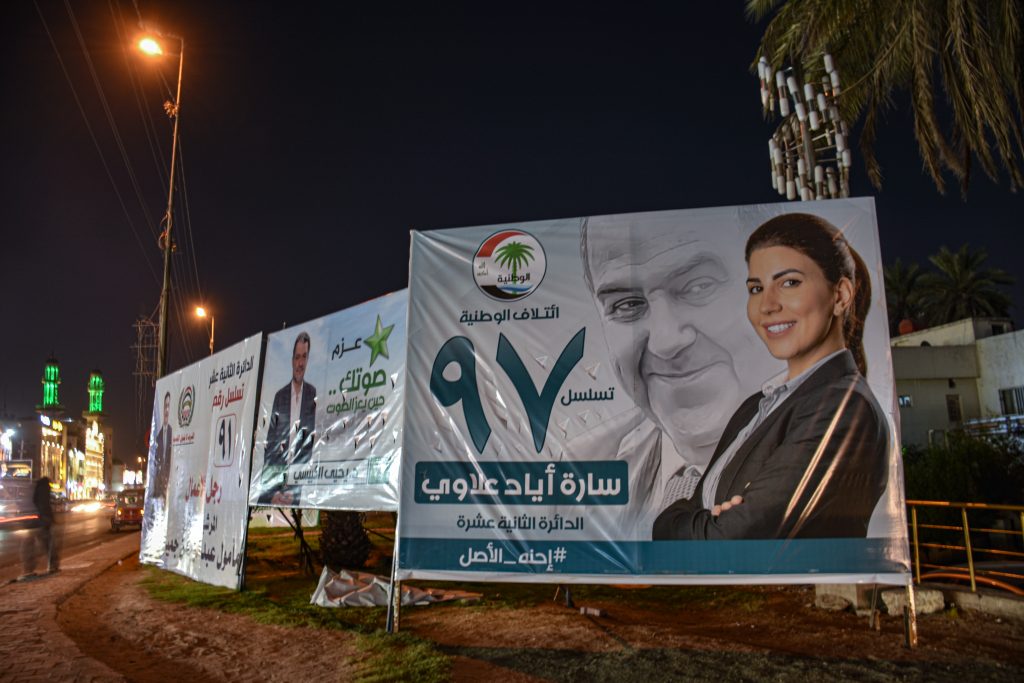
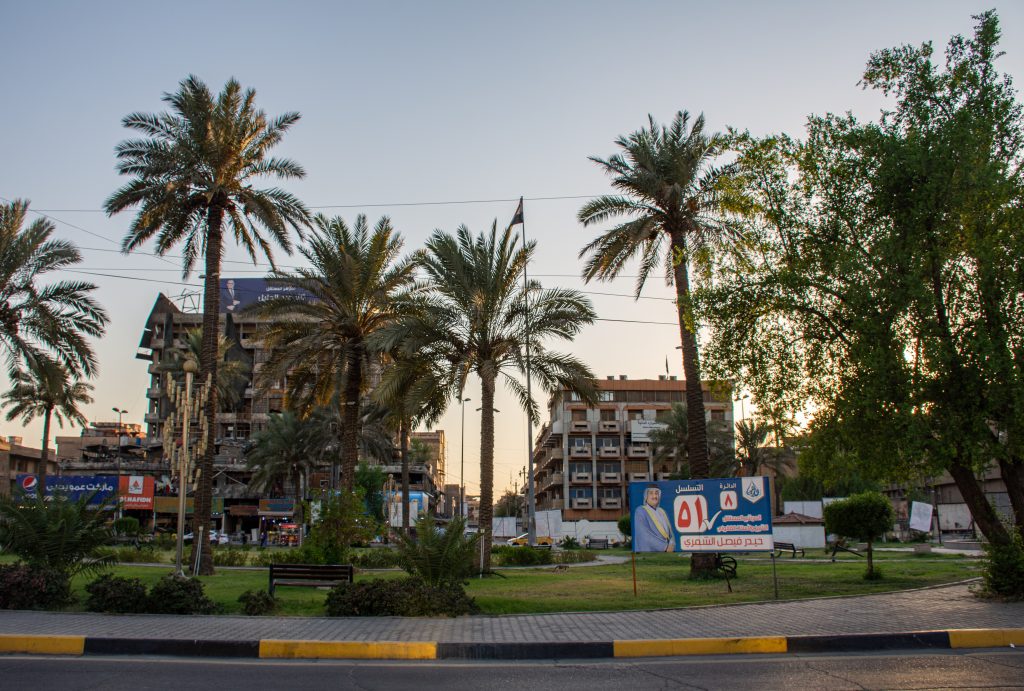
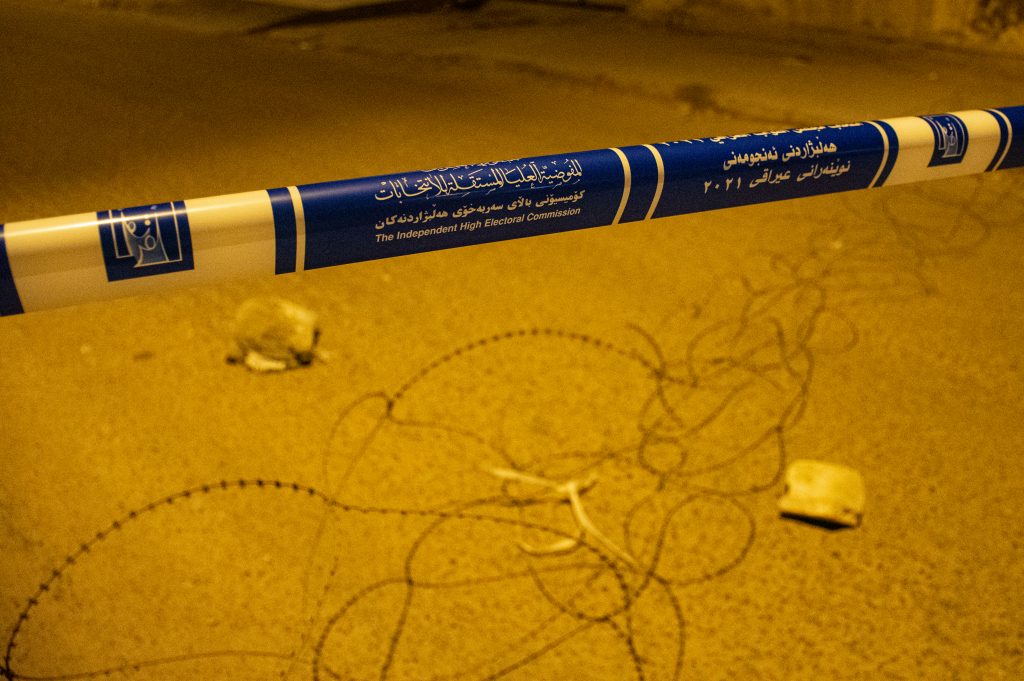
Political propaganda from the Sadrist Bloc in central Baghdad. The Sadrists, a Shia nationalist political force turned out to be the winners of the election (Dídac Medrano).Big billboard from the National State Coalition of Nouri al-Maliki, the PM of Iraq from 2008 to 2014. His coalition is one of the many Shia forces running for the elections. (Dídac Medrano). Partly destroyed political propaganda displayed on a partly destroyed building in Mosul, Northern Iraq. What apparently looks like a vandalizing act is actually really normal as wind tears apart many of the political signs. (Dídac Medrano).Political propaganda in Mosul, Northern Iraq, a city still struggling be rebuilt after combats between Iraqi Armed Forces and Islamic State in 2017 destroyed most of the western shore of the Tigris river. (Dídac Medrano).Political propaganda in central Baghdad. Every political party identified itself with a number that had to be chosen on the election day. The wide majority of the political parties used Arab numbers, as in this case, being the 55 the number to be chosen upon voting. (Dídac Medrano).Political propaganda from Mohammed al-Halbousi’s Taqaddum party on an annihilated building in its stronghold Fallujah, Iraq. The province of al-Anbar is mostly sunni and the propaganda posters seen there are belonging to this branch of Islam. (Dídac Medrano).Political propaganda from the AZM sunni party waits to be displayed in the streets of Baghdad, Iraq. (Dídac Medrano).Political propaganda waiting to be displayed on the streets of Baghdad, Iraq, one week before election day. (Dídac Medrano).Nearby Tahrir square, many political signs are printed, as this is the area where most of the printing houses can be found. (Dídac Medrano).Political propaganda in al-Rashid street during book sells in central Baghdad. (Dídac Medrano).Big billboard depicting Iraq’s prime minister Mustafa al-Khademi and different world leaders such as Erdogan, Macron or Salman bin Abzulaziz remembering the Conference of Baghdad, celebrated in august 2021. (Dídac Medrano).Political propaganda showing the Kurdish flag alongside the Iraqi flag and the figure of Masoud Barzani, the leader of the Kurdish Democratic Party, headquartered in Erbil. The Kurds tend to get around 25 % of Iraq’s votes and thus they are always a key part on government formation. (Dídac Medrano).Political propaganda in a street of Karrada neighborhood. Most of the politicians running in the elections tend to display themselves alongside the Iraqi flag, thus offering their compromise with the country, in a context where external influence in politics is huge. (Dídac Medrano). Propaganda from the Sadrist Bloc in one of the most important shia strongholds of the country, Najaf. The Sadrist logo depicts a walking stick reminding the one that Muqtada al-Sadr wears. (Dídac Medrano).Women are widely seen in different political propaganda, from shia to christian formations. Despite not having majority on the parliament, their presence is increasing. (Dídac Medrano).Big signs of political propaganda are also present in Baghdad streets, even in light panels of big malls. There is a very big investment on this kind of propaganda, which can only be assumed by the major parties, such as the ones of Nouri al-Maliki, Haider al-Abadi or Adil Abdul Mahdi. (Dídac Medrano).Billboard from the pro-Iranian Popular Mobilization Forces depicting four coffins with the Iraqi flag and the holy shrine of Karbala at the end of the tunnel. Iraqi elections are heavily influenced by this armed groups, as many of them have their own political parties. (Dídac Medrano).Political propaganda from the Alliance of Nation State Forces covered with banners of the Sadrist Movement in central Baghdad. Firstly, the sadrists adopted a position that demanded their followers to avoid participation in the election. Nevertheless, weeks before the election day they started encouraging their voters to go to polling stations, displaying a very big amount of their flags around the capital city. (Dídac Medrano). Some more political propaganda signs depicting women in central Baghdad. (Dídac Medrano). Political propaganda in Mosul next to a sunni mosque in Nineveh region, Iraq. (Dídac Medrano).Political propaganda depicting Iyad Alawi (grey coloured), former interim PM of Iraq from 2004 to 2005. (Dídac Medrano). Iraqi politician wearing a traditional dress in a political propaganda sign. Political parties sometimes appeal to traditionalism as others tend to modernize themselves opting to dress like politicians in the West. (Dídac Medrano).Painting honoring Tishreen revolution in 2019, in the underground bridge that crosses Tahrir Square. There are many paintings honoring the deceased demonstrators during the protests, as hundreds of them were killed by either tear gas bullets or real machine gun ammunition. (Dídac Medrano). Streets holding polling stations were blocked with barbed wire and different banners from the High Electoral Commission in order to avoid attacks in the polling stations. Many soldiers were deployed on election day, as fighter jets cruised the sky and interregional movement was forbidden.
Usamos cookies en nuestro sitio web para brindarle la experiencia más relevante recordando sus preferencias y visitas repetidas. Al hacer clic en "Aceptar todo", acepta el uso de TODAS las cookies. Sin embargo, puede visitar "Configuración de cookies" para proporcionar un consentimiento controlado.
This website uses cookies to improve your experience while you navigate through the website. Out of these, the cookies that are categorized as necessary are stored on your browser as they are essential for the working of basic functionalities of the website. We also use third-party cookies that help us analyze and understand how you use this website. These cookies will be stored in your browser only with your consent. You also have the option to opt-out of these cookies. But opting out of some of these cookies may affect your browsing experience.
Necessary cookies are absolutely essential for the website to function properly. These cookies ensure basic functionalities and security features of the website, anonymously.
Cookie
Duración
Descripción
cookielawinfo-checkbox-analytics
11 months
This cookie is set by GDPR Cookie Consent plugin. The cookie is used to store the user consent for the cookies in the category "Analytics".
cookielawinfo-checkbox-functional
11 months
The cookie is set by GDPR cookie consent to record the user consent for the cookies in the category "Functional".
cookielawinfo-checkbox-necessary
11 months
This cookie is set by GDPR Cookie Consent plugin. The cookies is used to store the user consent for the cookies in the category "Necessary".
cookielawinfo-checkbox-others
11 months
This cookie is set by GDPR Cookie Consent plugin. The cookie is used to store the user consent for the cookies in the category "Other.
cookielawinfo-checkbox-performance
11 months
This cookie is set by GDPR Cookie Consent plugin. The cookie is used to store the user consent for the cookies in the category "Performance".
viewed_cookie_policy
11 months
The cookie is set by the GDPR Cookie Consent plugin and is used to store whether or not user has consented to the use of cookies. It does not store any personal data.
Functional cookies help to perform certain functionalities like sharing the content of the website on social media platforms, collect feedbacks, and other third-party features.
Performance cookies are used to understand and analyze the key performance indexes of the website which helps in delivering a better user experience for the visitors.
Analytical cookies are used to understand how visitors interact with the website. These cookies help provide information on metrics the number of visitors, bounce rate, traffic source, etc.
Advertisement cookies are used to provide visitors with relevant ads and marketing campaigns. These cookies track visitors across websites and collect information to provide customized ads.





Deja una respuesta